
Protein Molecular Weight Markers


Cell Signaling Technology Color-coded Prestained Protein Marker, Low Range (1.7-42 kDa) 250 µl

Color-coded Prestained Protein Marker, Low Range (1.7-42 kDa) 250 µl

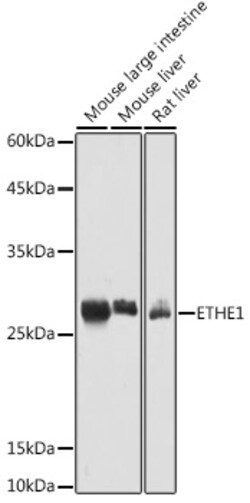
ABclonal Technology ETHE1 Rabbit pAb
This gene encodes a member of the metallo beta-lactamase family of iron-containing proteins involved in the mitochondrial sulfide oxidation pathway. The encoded protein catalyzes the oxidation of a persulfide substrate to sulfite. Certain mutations in this gene cause ethylmalonic encephalopathy, an infantile metabolic disorder affecting the brain, gastrointestinal tract and peripheral vessels. Alternative splicing results in multiple transcript variants encoding different isoforms.

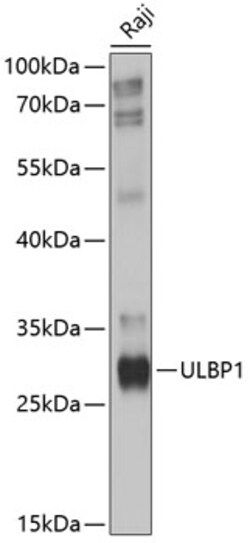
ABclonal Technology ULBP1 Rabbit pAb
The protein encoded by this gene is a ligand of natural killer group 2, member D (NKG2D), an immune system-activating receptor on NK cells and T-cells. Binding of the encoded ligand to NKG2D leads to activation of several signal transduction pathways, including those of JAK2, STAT5, ERK and PI3K kinase/Akt. Also, in cytomegalovirus-infected cells, this ligand binds the UL16 glycoprotein and is prevented from activating the immune system. Three transcript variants encoding different isoforms have been found for this gene.
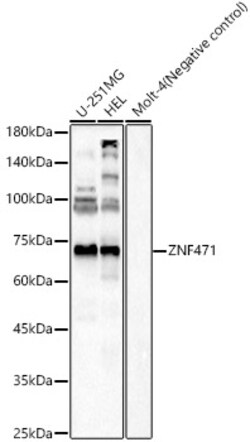
ABclonal Technology ZNF471 Rabbit pAb
Predicted to enable DNA-binding transcription factor activity, RNA polymerase II-specific and RNA polymerase II cis-regulatory region sequence-specific DNA binding activity. Predicted to be involved in regulation of transcription by RNA polymerase II. Located in nucleus.
Sigma Aldrich Fine Chemicals Biosciences fluorescent IEf-Marker pI
FLUORESCENT fluorescent IEf-Marker pI
Sigma Aldrich Fine Chemicals Biosciences fluorescent IEf-Marker pI
filtered through a 0.45 mum membrane filter
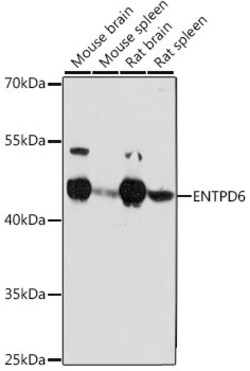
ABclonal Technology ENTPD6 Rabbit pAb
ENTPD6 is similar to E-type nucleotidases (NTPases). NTPases, such as CD39, mediate catabolism of extracellular nucleotides. ENTPD6 contains 4 apyrase-conserved regions which are characteristic of NTPases. Alternative splicing results in multiple transcript variants encoding different isoforms.
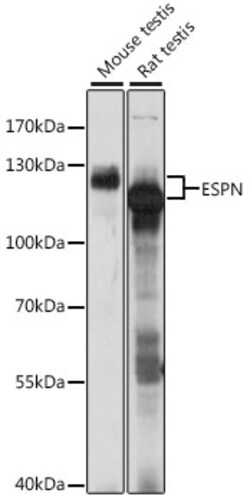
ABclonal Technology ESPN Rabbit pAb
This gene encodes a multifunctional actin-bundling protein. It plays a major role in regulating the organization, dimensions, dynamics, and signaling capacities of the actin filament-rich, microvillus-type specializations that mediate sensory transduction in various mechanosensory and chemosensory cells. Mutations in this gene are associated with autosomal recessive neurosensory deafness, and autosomal dominant sensorineural deafness without vestibular involvement.
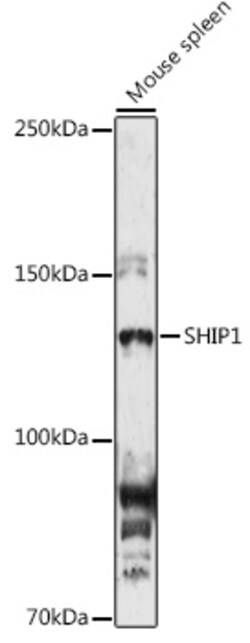
ABclonal Technology SHIP1 Rabbit pAb
This gene encodes a protein from the inositol polyphosphate-5-phosphatase (INPP5) family, containing an SH2 domain, an inositol phosphatase domain, and two C-terminal protein interaction domains. It is expressed mainly in hematopoietic cells, where its translocation from the cytosol to the plasma membrane is regulated by tyrosine phosphorylation. At the plasma membrane, it hydrolyzes the 5 phosphate from phosphatidylinositol (3,4,5)-trisphosphate and inositol-1,3,4,5-tetrakisphosphate, influencing multiple signaling pathways. It also localizes to the nucleus, possibly participating in nuclear inositol phosphate signaling. The protein functions as a negative regulator of myeloid cell proliferation and survival. Mutations are linked to immune system defects, cancers, and Inflammatory Bowel Diseases like Crohns and Ulcerative Colitis. Alternative splicing generates multiple transcript variants.
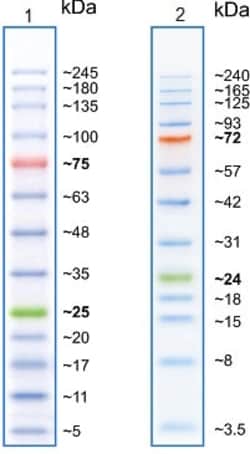
Abcam Prestained Protein Ladder - E x tra broad molecular weight (5 - 245 kDa), 500UL
5-245 kDa prestained protein ladder is a three-color protein standard with 13 prestained proteins. - Suitable for western blot (WB), SDS-PAGE - Designed for monitoring protein separation - Supplied in gel loading buffer and is ready to use
The product is subject to the following: Abcam Restricted Use Statement
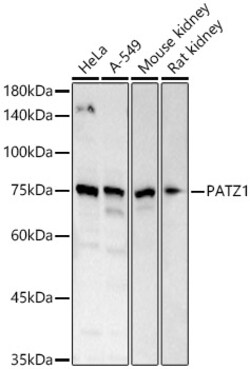
ABclonal Technology PATZ1 Rabbit pAb
This gene encodes a protein with an A-T hook DNA-binding motif, a POZ domain for protein interactions and transcriptional repression, and zinc fingers for DNA binding, suggesting a role as a transcriptional repressor. In small round cell sarcoma, a chromosome 22 inversion fuses this gene with EWS, forming a t(1;22)(p36.1;q12) translocation. This rearrangement joins the EWS transactivation domain with this protein’s zinc finger domain, creating a chimeric transcription factor. This fusion is an example of intra-chromosomal rearrangement. Four alternatively spliced transcript variants have been identified.
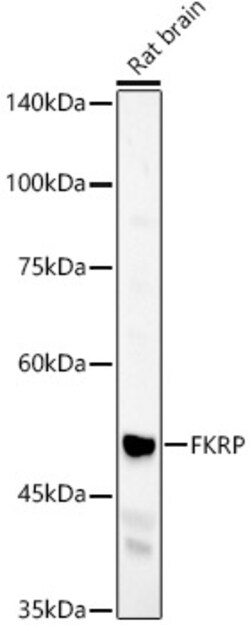
ABclonal Technology FKRP Rabbit pAb
This gene encodes a protein which is targeted to the medial Golgi apparatus and is necessary for posttranslational modification of dystroglycan. Mutations in this gene have been associated with congenital muscular dystrophy, cognitive disability, and cerebellar cysts. Several alternatively spliced transcript variants of this gene have been described, but the full-length nature of some of these variants has not been determined.
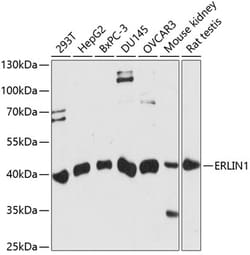
ABclonal Technology ERLIN1 Rabbit pAb
The protein encoded by this gene is part of a protein complex that mediates degradation of inositol 1,4,5-trisphosphate receptors in the endoplasmic reticulum. The encoded protein also binds cholesterol and regulates the SREBP signaling pathway, which promotes cellular cholesterol homeostasis. Defects in this gene have been associated with spastic paraplegia 62.
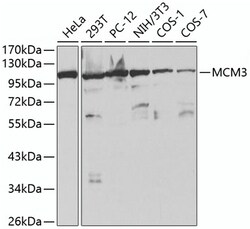
ABclonal Technology MCM3 Rabbit pAb
The protein encoded by this gene is one of the highly conserved mini-chromosome maintenance proteins (MCM) that are involved in the initiation of eukaryotic genome replication. The hexameric protein complex formed by MCM proteins is a key component of the pre-replication complex (pre_RC) and may be involved in the formation of replication forks and in the recruitment of other DNA replication related proteins. This protein is a subunit of the protein complex that consists of MCM2-7. It has been shown to interact directly with MCM5/CDC46. This protein also interacts with and is acetylated by MCM3AP, a chromatin-associated acetyltransferase. The acetylation of this protein inhibits the initiation of DNA replication and cell cycle progression. Several transcript variants encoding different isoforms have been found for this gene.
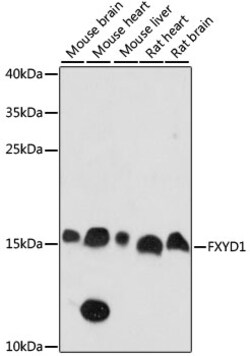
ABclonal Technology FXYD1 Rabbit pAb
This gene encodes a member of the small membrane protein family characterized by a 35-amino acid signature sequence (PFXYD) and regulates ion transport. FXYD proteins, such as FXYD1 (phospholemman), FXYD2 (gamma subunit of Na,K-ATPase), FXYD3 (MAT-8), FXYD4 (CHIF), and FXYD5 (RIC), can induce channel activity. FXYD2 regulates Na,K-ATPase, and transmembrane topology has been established for FXYD1 and FXYD2. This gene product is a plasma membrane substrate for several kinases (PKA, PKC, NIMA, and myotonic dystrophy kinase) and is involved in ion channel formation or regulation. Different 5 UTR transcript variants have been described.